

 Australia
  Brazil
  Canada
  Chile
Chile  China
China  Columbia
  Denmark
  Egypt
Egypt  France
  India
India  Indonesia
  Italy
Italy  Malaysia
  New Zealand
  Norway
  Panama
  Peru
Peru  Poland
  Portugal
  Saudi Arabia
  Singapore
  South Korea
  Spain
Spain  Sweden
  Taiwan
  Thailand
  Türkiye
  United Kingdom
  United States
  Vietnam


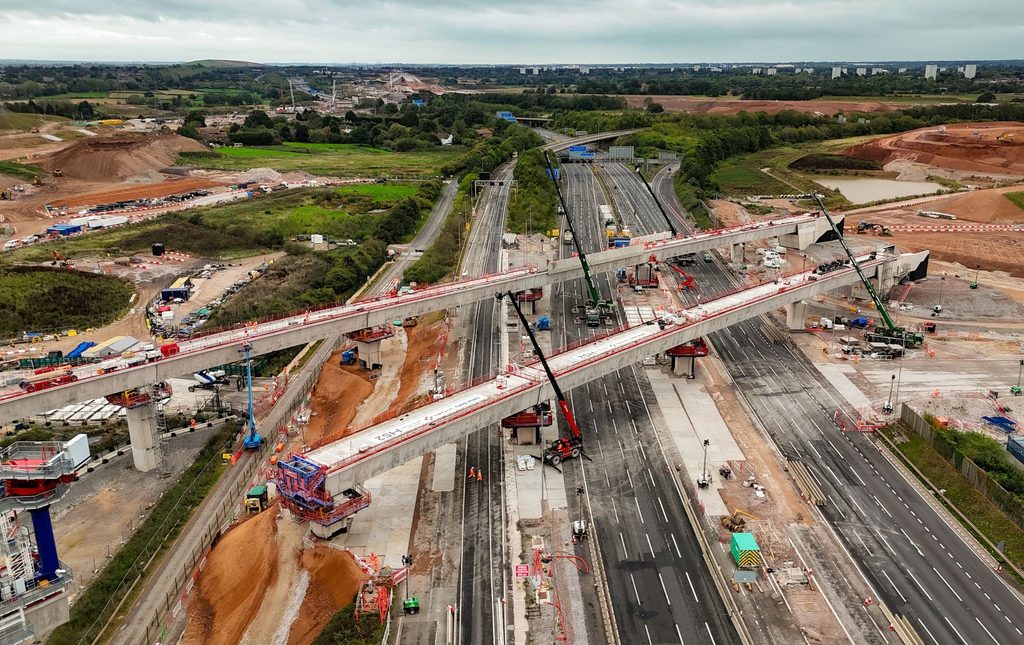
The complex multi-stage operation at the Water Orton viaduct site was completed in the early hours of this morning (Monday, 21 September), with the motorway reopening at around 4am as planned.
To take full advantage of the closure, a separate team – three miles to the south – spent the weekend lifting the last beams that will support another major HS2 bridge known as the ‘twin box’.
The 300-metre-long structure near the NEC is formed of two boxes that will support the railway as it passes over the carriageways. This approach has been chosen because of the angle at which the railway must cross the motorway.
The operations at both sites – which builds on progress over four weekends this summer – was led by HS2’s West Midlands construction partner, Balfour Beatty VINCI (BBV).
Engineers can now proceed to the final stages of construction – installing the remaining parapets along the sides of the Water Orton viaducts, and the final concrete pours on the twin box ready for railway tracks to be laid.
HS2 is now at the peak of construction, with site teams focused on boosting productivity route wide. This is happening in parallel with Chief Executive Mark Wild’s comprehensive reset of the project, designed to ensure that the remainder of the work is delivered as efficiently as possible and for the lowest reasonable cost.

“We are proud to have brought SYSTRA’s global design expertise to these major structures. Delivering complex engineering over one of the region’s busiest motorways demands not only innovation and technical excellence, but careful coordination at every stage of planning and installation to minimise disruption and keep road users moving as safely and efficiently as possible. Close collaboration with National Highways, BBV and HS2 Ltd was essential, and ensured the lifts were delivered to schedule.”
Andy Baines, Technical Director, SYSTRA Ltd
Agnes Usciak, HS2 Ltd’s Senior Project Manager, said: “I’d like to thank motorists and local residents for their patience during this huge programme of work – our biggest yet over the motorway network.
“Splitting a huge construction programme into four separate weekends requires meticulous planning, and our engineers executed the entire operation with pin-point precision, ensuring the motorway reopened on time, every time.
“Structural completion of the Water Orton viaducts and the twin box means the end is in sight for our bumper programme of motorway works this year.”
The construction programme was meticulously planned into four weekends, spaced across the summer months, with engineers working on all three structures at the same time to reduce the number of closures.
National Highways seized the opportunity to conduct their own programme of works while the motorway was closed – including demolition of the Bickenhill Bridge at the northern side of the M42 junction 6 roundabout.
Twin box
During the September closure, a 150-strong-team installed the final 44 beams over the southbound carriageway, completing the roof which will carry trains over the M42 near the NEC.
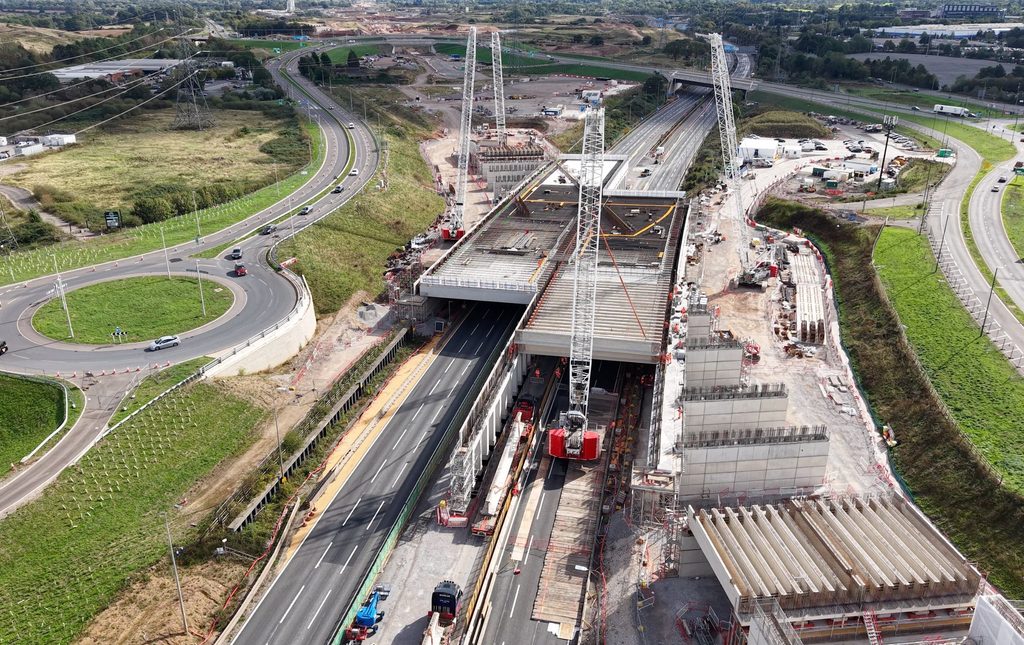
The twin box roof is formed of 175 individual beams, which weigh between 56 and 92 tonnes. A 300-tonne crawler crane lifted and lowered each of the 23-metre-long beams into position, bridging the gap between the supporting walls and columns either side of the carriageway and inside the central reservation.
The completed structure now stands 10-metres-high, with two 145-metre-long walls and 46 internal columns supporting the 9,800-tonne beamed roof.
Water Orton viaducts
The two Water Orton viaducts form the top of the triangular ‘delta junction’, linking Birmingham with the mainline heading north. They cross the M42, A446, the Birmingham – Peterborough railway line, and the River Tame.
A separate team of 75 men and women have now installed the final two spans of Water Orton Viaduct number 2 over the southbound carriageway – replicating the successful extension of Water Orton 1 in August.
Each 45-metre-long span was built using 18 pre-cast segments, which were manufactured locally at BBV’s concrete batching plant in Kingsbury.
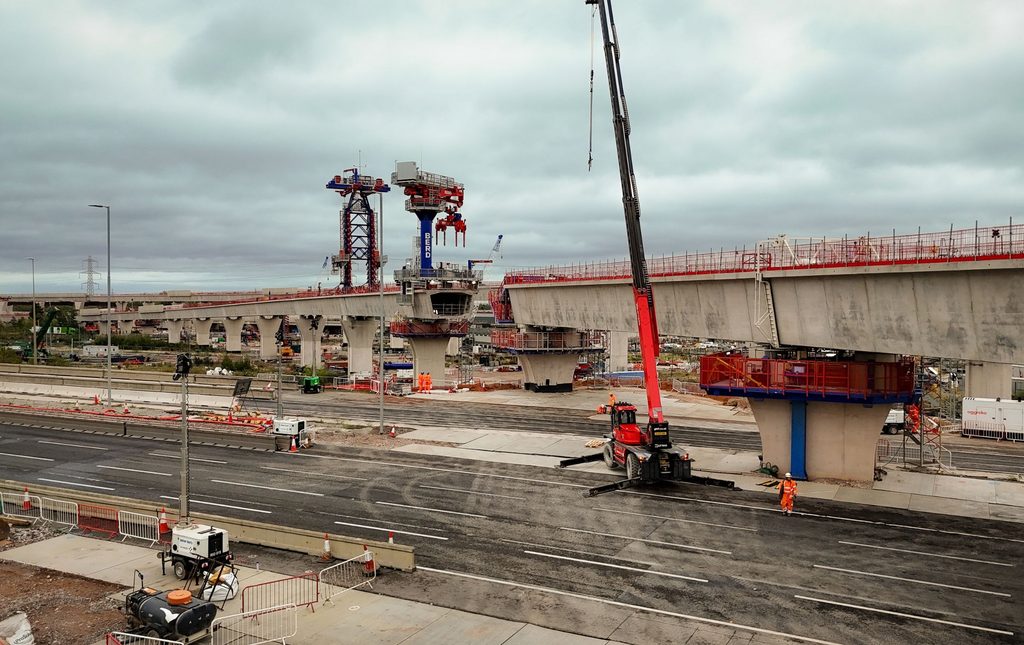
Once assembled, the 1,000-tonne spans were driven into position using self-propelled modular transporters. They were then locked in place using tensioning cables inside the hollow centre of the viaduct.
The structural design has been carried out by Balfour Beatty VINCI’s Design Joint Venture (DJV), made up of Mott MacDonald and SYSTRA, with WW+P Architects.
Oliver Shore, Project Director for Balfour Beatty VINCI, said: “The twin box and Water Orton Viaducts are three major structures that cross the busy M42 motorway. In just four weekends, we’ve completed the bridging works on each of them, closing the gap over the north and southbound carriageways.
“This was a huge engineering challenge and I’m so proud of the way our teams have responded. Their skill, dedication and hard work throughout the summer means we can move forward to the next exciting phase of our work.”
In the coming days, BBV’s engineers will extend Water Orton 2 by a further 40-metres, closing the final gap above Gilson Road.
There will be a further closure of the M42 from 9pm on Friday, 23rd October to 5am on Monday, 26th October to install the viaduct’s parapets on the sections directly above the motorway.
To make full use of the closure, that the same weekend engineers will also carry out the fourth and final slide of the M6 South Viaduct West deck. The M6 carriageway will stay open during these works – only the M42 North to M6 North connector road will be closed.
Progress is also being made on other parts of the project with the platforms now in place at Old Oak Common, the first ‘green tunnel’ complete and the Curzon 2 viaduct on the approach to Curzon Street now in place.
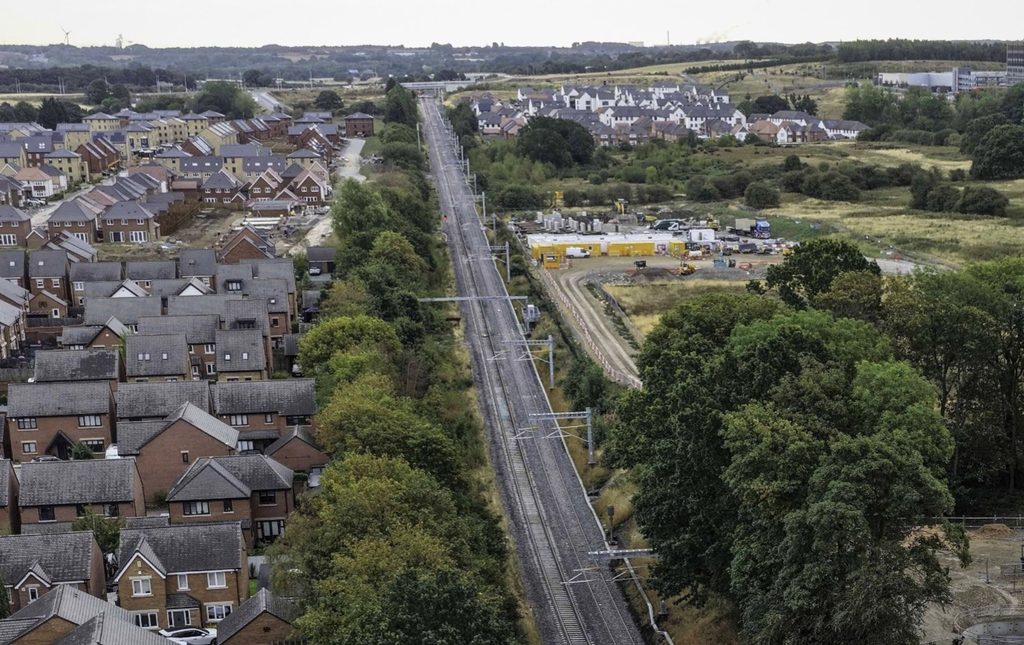
TRU East Alliance completes major track delivery programme on the Transpennine Route UpgradeBetween September 2021 through to August 2026, the TRU East Alliance delivered 34,700 metres of plain line track renewals and 19 points renewals across 17 miles of track along the route, along with 5,200m of track drainage, the renewal and recovery of 300 IBJ’s, and over 25,000m of rerailing.
The work, delivered over the last five years, forms part of the wider Transpennine Route Upgrade project, a transformative railway programme that will deliver faster, greener and more reliable journeys across the North.
The TRU East Alliance has delivered these extensive track renewals and infrastructure improvements to support the modernisation of the route and prepare the railway for future electrification.

This significant milestone reflects the years of successful collaboration across the TRU East Alliance, resulting in fantastic outcomes. It’s really important that we celebrate these achievements with all the teams involved as the project progresses, and every colleague should feel rightly proud of the part they have played.
Steph McElhatton, Programme Director at SYSTRA Ltd
The work undertaken represents one of the most significant track delivery programmes undertaken on this section of railway in over 40 years.
The programme delivered strong engineering and design performance and developed an innovative methodology for the utilisation of RRV plant to generated efficiencies over conventional track renewal methodologies
James Ramsden, TRU East Alliance director, said: “Our mission is to transform the route and deliver a railway that allows people to travel faster, have greater reliability, and greater comfort. The completion of track delivery works is a significant milestone in achieving that ambition.
“The work undertaken over the last five years has been tremendous. Delivering upgrades of this scale requires a true one team approach, and to do so while also undertaking essential upgrades to overhead line equipment, bridges and other key structures, is something everyone involved should be incredibly proud to have achieved.
“I would like to thank our alliance partners, our client, and our wider supply chain for their continued commitment and collaboration throughout the programme.”
The completion of the track delivery programme represents another important milestone for the Transpennine Route Upgrade, as work continues to transform one of the North’s most important rail corridors to improve reliability, increase capacity and support the introduction of cleaner, more sustainable rail travel for passengers across the region.
- Read our case study about the Transpennine Route Upgrade (East) – Case study – SYSTRA UK
The services provided will support the water company’s capital delivery and environmental programmes and inform planning, permitting, design, and construction activities across a range of infrastructure projects and enabling works in the East of England.
The service scope includes, among others:
- Baseline hydrological surveys
- Flood risk assessments and modelling
- Hydrological Impact Assessments (HIA) and input to Environmental Impact Assessments (EIA)
- Post-construction hydrological monitoring and reporting
- Support for statutory consultation and planning submissions
- Data analysis, GIS mapping, and reporting in line with regulatory and project-specific requirements.

Securing a place on the Anglian Water framework is an indicator of our growing reputation in the water market.
SYSTRA brings expertise and experience from a range of projects in the transport and infrastructure sectors to our water clients, always with safety, sustainability and innovation at the core.
Nick Salt, CEO of SYSTRA Limited
The framework will also cover a range of environmental monitoring programmes, including:
- Monitoring activities under the Anglian Water Services (AWS) Drought Plan, which may overlap with ecological surveys. This includes transitioning between baseline, pre-drought, drought permit, and post-drought monitoring frequencies, currently active across seven areas in the AWS region.
- Monitoring for AWS Environmental Destination Investigations, particularly short-term data collection to strengthen the evidence base for sustainable abstraction as part of the current Asset Management Period (AMP8) Water Industry National Environment Programme (WINEP).
- Baseline and ongoing monitoring to support capital projects and other AMP8 initiatives, ensuring robust data informs project development, design, and consenting.
The underground platforms will be served by HS2’s fleet of new high-speed trains, taking passengers between the capital and the West Midlands, as well as destinations further north via the West Coast Main Line.
HS2’s station construction partner Balfour Beatty Vinci SYSTRA (BBVS) oversaw the work to construct the platforms from its sub-contractor Expanded, which began in April 2025.
Work began by building 1.59m-high walls, known as invert walls. These were cast in situ on site before the pre-cast platform slabs, manufactured by Explore in Worksop, East Midlands, were lifted and secured on top. In total there are 1,946 slabs, each measuring up to 2m by 4m and weighing between four and five tonnes.
The team built the platforms concurrently from each end, before meeting in the middle in a formation of three island-style blocks. The platforms have a void below, allowing for services, such as electricity to be installed underneath.
Further fit out work on the platforms will now take place, including the construction of staff and equipment rooms. On the platforms, steelwork for lifts and escalator installation will begin, and floor finishes will be fitted once the other elements have been completed.
In addition to the six high speed platforms, eight further platforms will be built at ground-level at Old Oak Common, being served by the Elizabeth line, Great Western Mainline and Heathrow Express services. Old Oak Common will be the 42nd stop on London’s Elizabeth line and will be one of the UK’s best-connected stations with trains reaching over 100 destinations.

“This achievement is testament to the dedication of our teams and the value of accountability and collaboration.
Through strong performance management and the use of visualisation to enhance data-driven delivery, we established a single source of truth that transformed complex programme insights into clear actions, enabling informed decision-making, proactive risk management, and empowering our teams to successfully deliver these outstanding results.”
Nizar Award, Old Oak Common Project Director, SYSTRA Limited
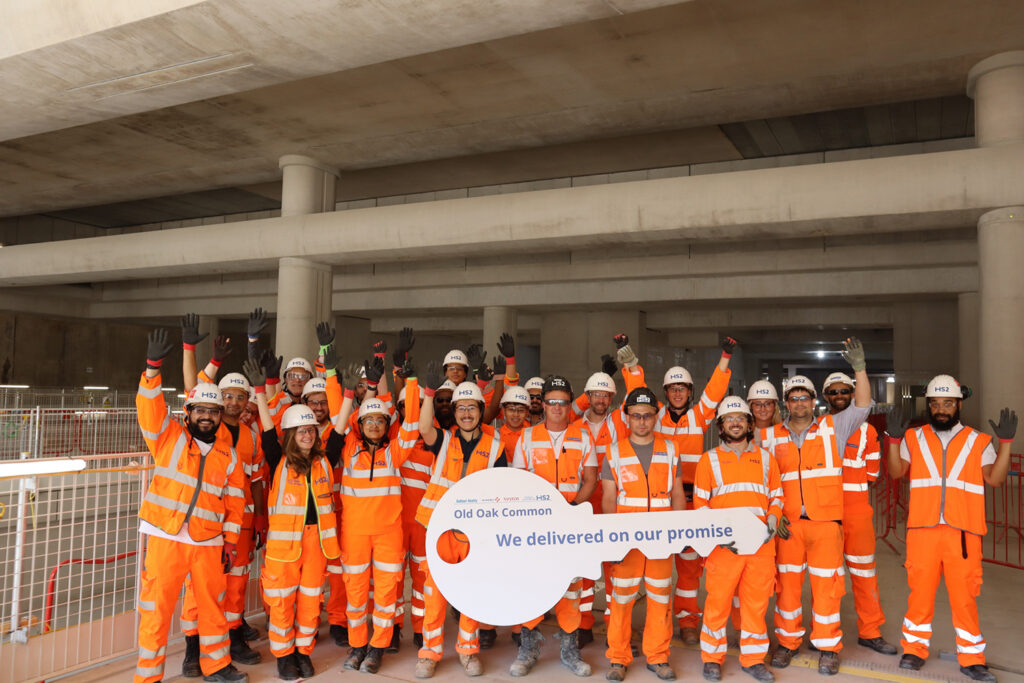
Kim Kapur, HS2’s Old Oak Common Area Director, said: “Going into the underground box at Old Oak Common, you can immediately visualise how it will look as an operational station, including where passengers will board or alight HS2’s brand new trains. The scale of the work – and the station now taking shape – is remarkable.
“However, there is much more to do. This includes construction of the conventional, surface level platforms, completion of tunnels either side of the underground box and installation of the impressive station roof, which will begin next year.
“Old Oak Common will be transformative for the local area, providing a new transport hub, with a new vibrant neighbourhood developing around it.”
Steve O’Sullivan, Project Director, Balfour Beatty VINCI SYSTRA joint venture, said: “This achievement reflects the expertise of our multidisciplinary teams who have worked collaboratively to deliver one of the most technically challenging stations currently being built in the UK, drawing on world-class engineering, specialist knowledge and a shared commitment to excellence.
“As the full scale, form and function of the station is starting to come into view there is a tremendous sense of pride in what has been accomplished so far to transform an ambitious design into a functioning transport hub, with our focus now on progressing works into the next phase.”
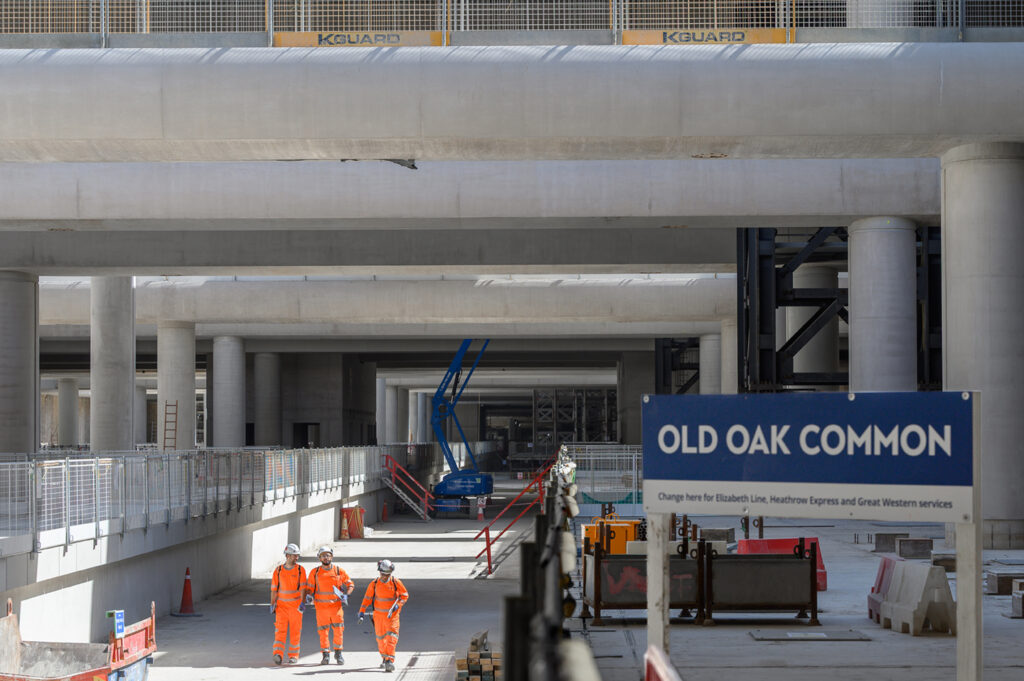
HS2’s CEO Mark Wild is continuing to lead a fundamental reset of the project, and a new detailed programme of work is being developed and agreed. At Old Oak Common, construction momentum continues to build, with HS2’s London tunnels contractor, Skanska Costain STRABAG, due to break through via the west wall of the underground box soon. This will connect the station to the Northolt Tunnel and open it up to wider HS2 route further north.
At the same time, work continues on the Euston Tunnel being built to the east of the station, which will eventually connect Old Oak Common with HS2’s central London terminus. Two tunnel boring machines were launched from the station box at the start of this year and are expected to complete their journey to Euston in 2027.
The connectivity at Old Oak Common will come from the multiple existing lines that are served such as the Great Western and Elizabeth Line. Work to build the overground platforms is ongoing, with the first platforms slabs due to be installed later this year. The team is also now looking forward to the station coming further out of the ground, with the first part of the stations vast roof going in early next year.
In addition to the additional capacity that HS2 will create on the southern section of the West Coast Main Line, creating more train paths for more frequent and reliable local and regional services, HS2 is spearheading local economic growth around its stations.
Economic research, published by HS2 last year, shows a £10bn boost in the areas surrounding its new station site in west London. Within 1.5 miles of Old Oak Common Station, HS2 will be responsible for generating over 22,000 homes, 693,000 square metres of commercial floorspace, and 18,782 jobs, the research, conducted by Arcadis, found.
View more about our projects on HS2
Trio of Viaducts Complete on HS2The trio of viaducts – Balsall Common, Marsh Farm and River Blythe – are all within the Solihull metropolitan borough, on the southern approach to Interchange station.
Next, engineers working for HS2’s construction partner, Balfour Beatty VINCI, will install the final parapets on the River Blythe Viaduct – the largest of the three bridges that carry the high-speed railway through Solihull, and the closest to Interchange Station – approximately 1.5 miles away.
Marsh Farm Viaduct was the first of these neighbouring structures to reach completion in summer 2025. The main structure of Balsall Common Viaduct was finished earlier this year, and all 304 parapets will be installed by spring 2027.

“The structural completion of these three viaducts is a significant milestone for the project and an important moment for SYSTRA, working alongside Mott MacDonald in the Design Joint Venture.
It’s a real reflection of the technical expertise, innovation and collaboration behind this sublot, and of the global effort across our business to turn that design work into built infrastructure on site. I’m immensely proud of how our teams have come together to solve complex engineering and environmental challenges and help bring the project to this point.”
Tim Noble, Sublot Manager, SYSTRA Ltd
Doug Barnett, HS2 Ltd’s senior project manager said: “Our engineering teams are making fantastic progress on the Interchange Station approach, and it’s a significant achievement that all three viaducts in the Solihull borough are now structurally complete.
“The design and landscaping solutions were of upmost importance to local residents, and we worked extremely hard to get that right.”
River Blythe Viaduct
Both the River Blythe Viaduct and Balsall Common Viaduct are ‘Key Design Elements’ (KDEs), which means their size, proximity to communities, or location within sensitive areas, marked them out as significant. Local communities therefore helped to influence their design.
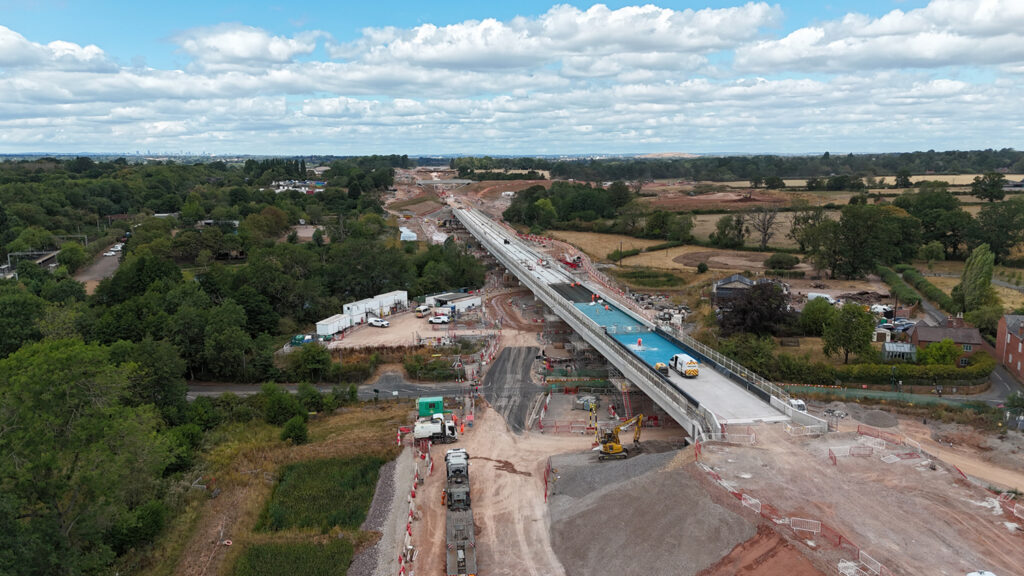
As the River Blythe is designated as a Site of Special Scientific Interest (SSSI), the 495-metre-long viaduct was built with this in mind. The low-lying 12-metre-high structure skims the landscape as it crosses the river, the floodplain and Meriden Road near Hampton in Arden.
The deck is supported by two abutments and 19 concrete piers with Y-shaped splits to reduce the volume of concrete and enhance the aesthetic appeal. Local communities opted for larger-sized polished parapets to one side of the structure and were consulted on the tree planting that will help to blend the viaduct into the landscape.
The space under the viaduct will allow safe passage for a range of species, including dispersal routes for badgers, bats, birds, fish, great crested newts, otters and water voles. The design will also allow views through and around the viaduct, and the polished concrete acoustic parapets will visually reduce the mass of the structure, as well as minimising noise for local residents.
Now structurally complete, engineers will carry out the finishing touches, adding acoustic barriers and conducting final water proofing works.
Marsh Farm Viaduct
Two and a half miles south is the smallest of the three structures – Marsh Farm Viaduct, which carries the HS2 main line over Bayleys Brook and surrounding marshland.
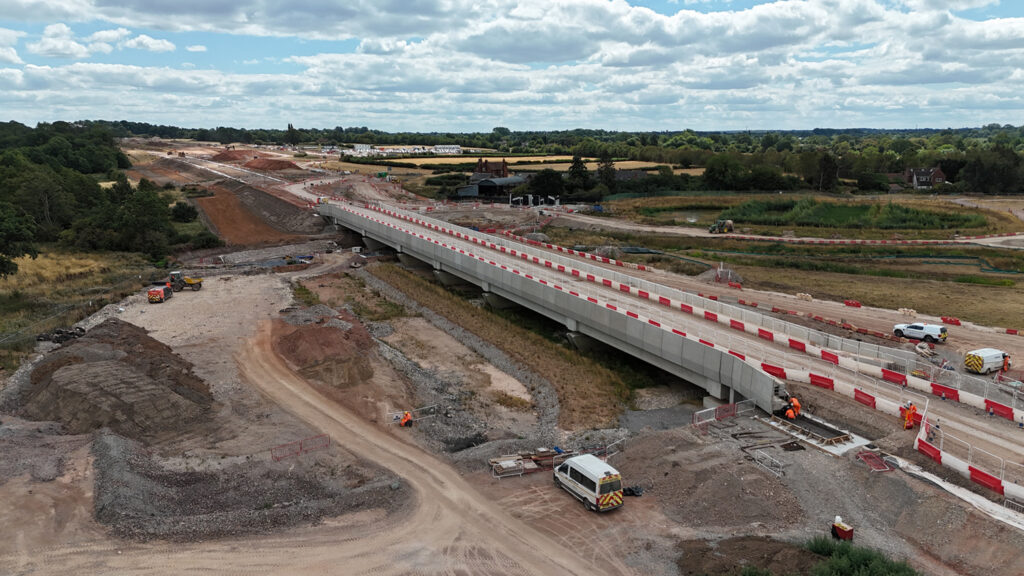
Standing just five-metres above ground, the 145-metre-long viaduct is currently being used as a haul road to support construction of the adjacent embankments and cuttings, while reducing the number of lorries on local roads.
Balsall Common Viaduct
Just outside of the residential area of Balsall Common village stands the 430-metre-long Balsall Common Viaduct. Constructed to north-east of the existing Network Rail line, the eight-metre-high viaduct crosses Station Road, Truggist Lane, Bayleys Brook, Heart of England Way walk and the associated floodplain.
Now complete, engineers will begin installing the parapets, which were chosen by the local community. A public vote determined that the parapets would be designed with a polished finish to reflect the sky and surrounding vegetation, and that the viaduct would feature a unique weave motif in a nod to the area’s history of textile production.
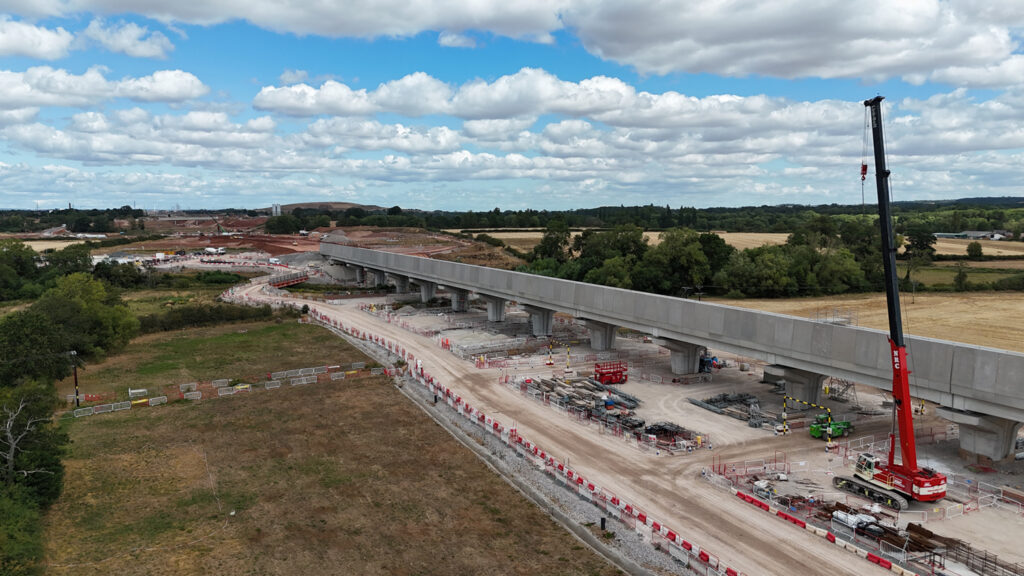
Matthew Parkes, Construction Manager at Balfour Beatty VINCI said: “The structural completion of these viaducts is a huge another achievement for Balfour Beatty VINCI and its supply chain partners. All three viaducts span a range of diverse landscapes and environments, including wetlands, floodplains, SSSIs and water courses – making this achievement even more remarkable.
“Every effort has been made to protect these precious spaces and habitats. The realignment of Bayleys Brook is just one example of how the team has delivered on this commitment, where engineers carefully diverted a 150-metre section of the brook to allow Balsall Common Viaduct to pass over the top.”
The HS2 route has more than 500 bridging structures – including over 50 major viaducts which will stretch for a combined total of 15 kilometres (9 miles) across valleys, rivers, roads and flood plains.
When complete, Britain’s new high-speed railway will create quicker and more reliable journeys, driving economic growth while crucially freeing up space for more local trains on the most congested part of the West Coast Main Line.
From Interchange station, passengers will be able to travel to London Euston and HS2’s new superhub station Old Oak Common, which will be directly linked to over 100 locations in the UK.
View our high speed rail projects
TRU East Alliance awarded £160m contract for new Shipley train depotThe Shipley TrainCare Centre will support the operation of Northern’s electric train fleet, helping to improve reliability and resilience for passengers while enabling future phases of the programme to be delivered.
The depot will provide a vital new facility for the storage, servicing and maintenance of trains serving the Airedale and Wharfedale lines, supporting more efficient and dependable services across the region.
The TRU East Alliance – comprising of Network Rail, VolkerRail, Murphy, Siemens Mobility, SYSTRA and Arcadis – will deliver the project through an integrated design and build approach, bringing together the combined expertise of all partners.
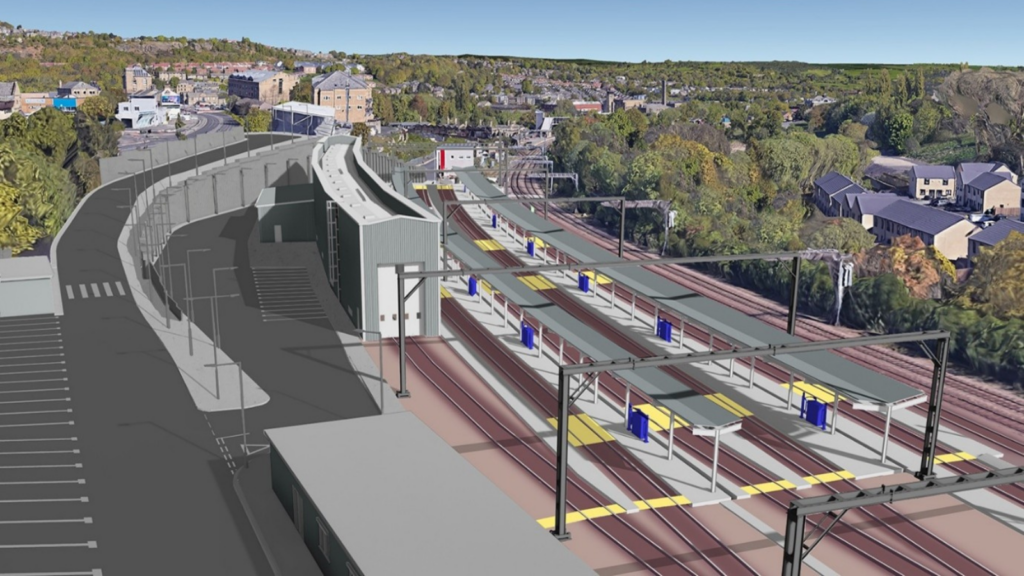
VolkerRail will lead on track, signalling, overhead line equipment installation and low voltage systems. Murphy will deliver lineside civils and major civil engineering works, while Siemens Mobility will deliver the high voltage power systems, overhead line design and, telecommunications infrastructure, including the first Rail Charging Converter (RCC) synchronised to the mainline network. The converter will enable the depot’s 25kV overhead line system to be supplied directly from a local 11kV electricity network connection, reducing infrastructure requirements and improving operational flexibility. SYSTRA is principal designer for the alliance, CSM provider, and also undertaking human factors and systems engineering roles. Arcadis is acting as designer for the Shipley project, supporting the safe and coordinated design for the scheme.
Work is already underway on site, with significant enabling activity completed over the past year. This has included site clearance, removal of contaminated materials and ground preparation, alongside major infrastructure works such as the diversion of an underground sewer and the construction of two large retaining walls.
This early activity demonstrates the pace of delivery across the Alliance and highlights how collaborative working is enabling complex infrastructure to be progressed efficiently, while supporting local jobs, skills and investment as the project moves forward.
James Ramsden, TRU East Alliance director, said: “Securing this contract award marks a major milestone for the TRU East Alliance and reflects the strong, collaborative approach we’ve developed with Network Rail, Northern and the wider Enterprise.
“With early works already well underway at Shipley, we’re now moving into the next phase of delivery. By bringing together the collective expertise of all Alliance partners, we’re well placed to deliver a modern, high-quality depot that will play an important role in supporting more reliable and resilient rail services across West Yorkshire.
“This project demonstrates the value of working as an integrated Alliance to deliver complex infrastructure that benefits passengers, communities and the wider rail network.”
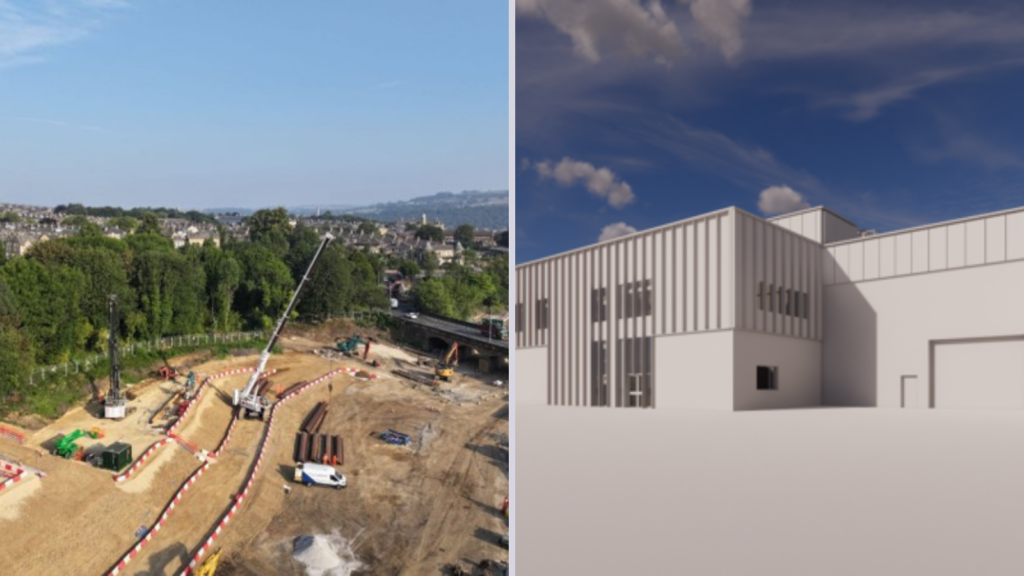
Construction of the main depot building has commenced and will be followed by all the supporting systems and infrastructure installation works until early 2028. Construction of the facility is expected to be completed by the end of 2027 and brought into service in early 2028.
The depot will initially be used to support Northern’s electric fleet while TRU East delivers significant disruptive access to re-model infrastructure at Neville Hill in Leeds.
The Transpennine Route Upgrade is a multibillion-pound programme that will transform journeys across the North, improving connectivity between major towns and cities including Manchester, Huddersfield, Leeds and York.
SYSTRA celebrates success on Strathclyde bus strategySpecialists at the multi-disciplinary engineering and consultancy company have supported Strathclyde Partnership for Transport to deliver the Strathclyde Regional Bus Strategy (SRBS) since 2023.
And the project won the Best Practice in Transport Planning award at a ceremony in Glasgow earlier this month.
SYSTRA, which has offices in Glasgow and Edinburgh , began by developing the Case for Change for the strategy before further work on an Options Appraisal in 2024.
Teams then collaborated to support a formal public consultation on the options for bus reform which led onto the development of the final SRBS.
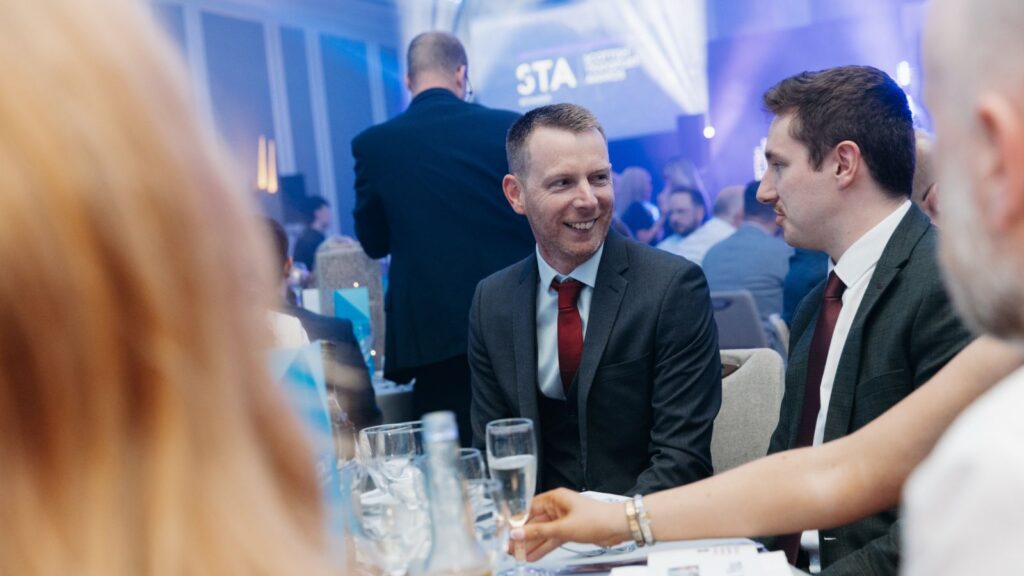
Laurence Venables, Associate at SYSTRA, worked on the project and attended the awards alongside the client, partners and stakeholders.
“It was a brilliant night with some worthy recognition for a wide variety of transport projects and teams across Scotland,” he said.
“Working on the SRBS was both a privilege and a learning experience for our teams. We were able to develop a robust set of policies and measures, alongside an action plan, to deliver a transformed bus network for the region.
“SYSTRA supported at all stages of the strategy development process, speaking to councils and operators, developing a comprehensive and ambitious network plan, and formulating a framework of bus reform options.”
The draft SRBS was taken to formal consultation in 2025 and received more than 5,000 responses. The SPT Partnership Board approved the strategy in 2025 and the SPT has since moved forward with developing a franchising process for the region.

The awards handed out were testament to the progress being made, with bus initiatives notable by their prominence across all the nominations.
Laurence Venables, Associate at SYSTRA
And Laurence says the award recognition signals the importance of securing resilient bus provision and services to regions across the country.
“This feels like a great time for bus in the UK,” he said.
“There’s a growing recognition of its crucial role for communities and economies, supported by investment and policy moves to place it front and centre.
“The awards handed out were testament to the progress being made, with bus initiatives notable by their prominence across all the nominations.”
More here on how SYSTRA is helping local authorities and bus operators design and deliver innovative, financially viable and sustainable bus services.
Putting journey planning back on the mapThe app, called Ride, allows users to plan, book and pay before riding buses, trains, trams, rental e-scooters and e-bikes.
Future mobility specialists at SYSTRA lead the options appraisal for the Mobility as a Service (MaaS) platform, which was tailored to the transport networks in Nottingham and Derby.
The project involved extensive stakeholder engagement and co-design; using interviews and workshops to identify and prioritise key platform features based on local needs.
Alastair Kitson, Associate at SYSTRA, said: “We’re delighted to have supported in the development, management, and delivery of the procurement process for Ride – which enabled the selection of preferred MaaS supplier Trafi.
“Our role also included programme management, defining key activities, and supporting an engagement programme to develop a high-level technical blueprint. This important work informed provider specifications and supplemented ITT documentation.”
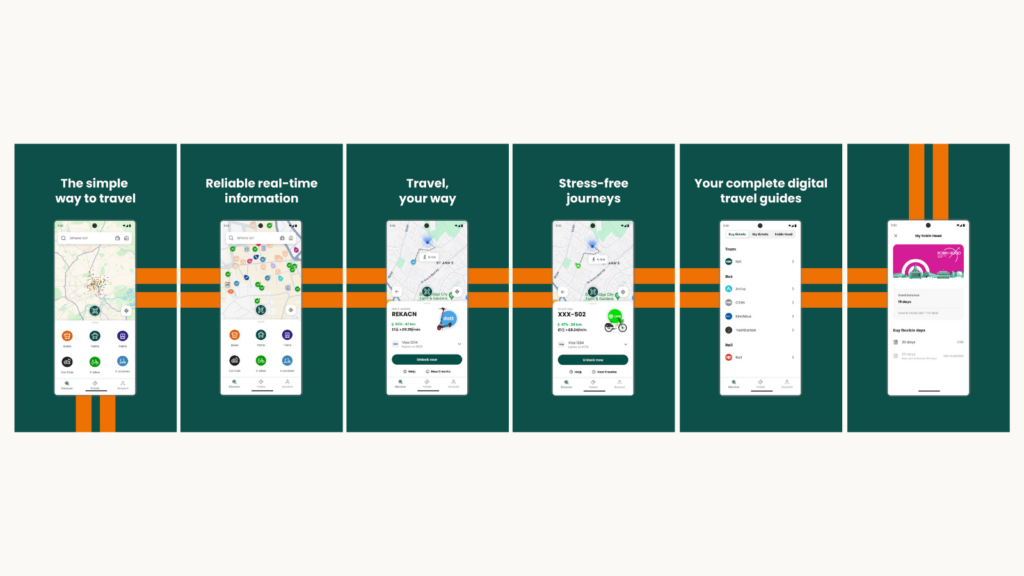
Ride has been described by Councillor Linda Woodings, Executive Member for Regional Development, Growth and Transport at Nottingham City Council, as “one of the first of its kind in the country” and “transformative” in how people track public transport options.
SYSTRA is committed to helping shape the sustainable, user-focused transport solutions of the future across the UK and Ireland.
Our teams help clients forge better links between stakeholders across the mobility sector. As with the Ride app, SYSTRA ensures partners and suppliers work collaboratively to develop practical, useful travel services, supported by accessible passenger planning and booking tools.
SYSTRA celebrates five decades in Ireland and Cork office expansionSYSTRA, the French-headquartered engineering consultancy with two offices in Ireland, has marked 50 years of supporting connectivity and growth in the country and the expansion of its Cork office.
To celebrate its new base at Penrose One, Penrose Dock, SYSTRA hosted a special event which was attended by distinguished guests Her Excellency the French Ambassador to Ireland Céline Place; Maxime Augé – Head of Economic Department at the Embassy of France in Ireland; Christine Deniel-Spicer, Senior Trade Advisor at Business France Ireland, and Sarah Madjedi, VP Sales and Bids at SYSTRA.
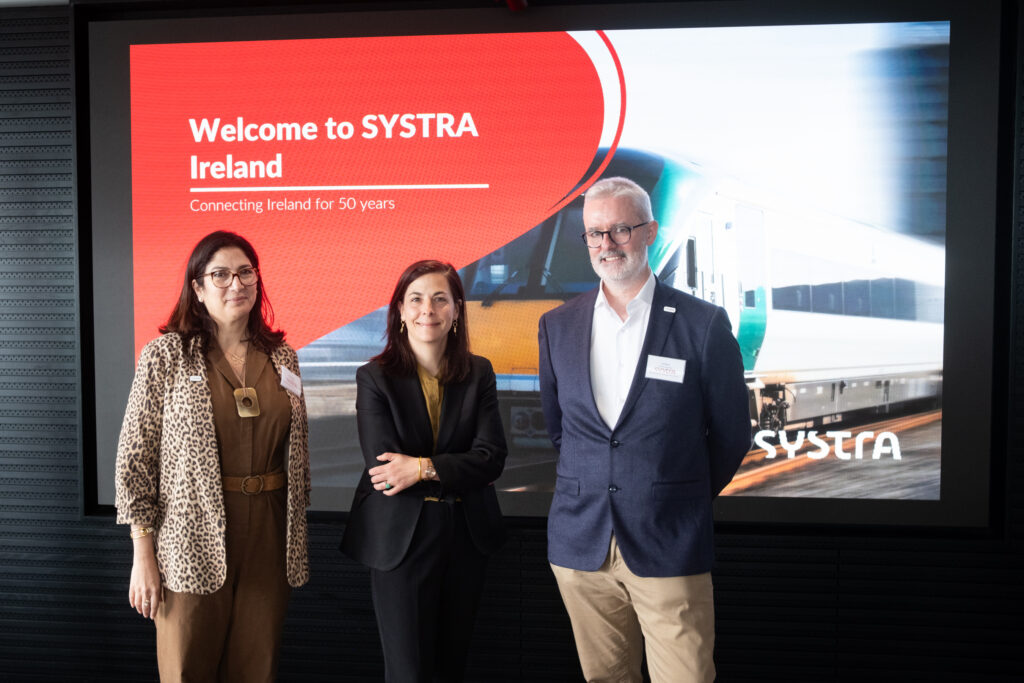
Colleagues from SYSTRA’s Cork and Dublin offices were also joined by key stakeholders from across Ireland’s business, transport and infrastructure communities to mark the opening of the larger premises, which reflect SYSTRA’s growth in Cork since opening its first office there in 2023.
Her Excellency the French Ambassador to Ireland Céline Place, said: “Ireland is investing heavily in its transport, rail, energy and water infrastructure to support sustainable growth and the transition to a low‑carbon economy.
“With their expertise of complex projects across the full project lifecycle — from strategic planning to design and delivery — French companies like SYSTRA are well positioned to support these national priorities. I warmly congratulate the SYSTRA teams in Cork and across Ireland for their commitment and achievements and wish them every success.”
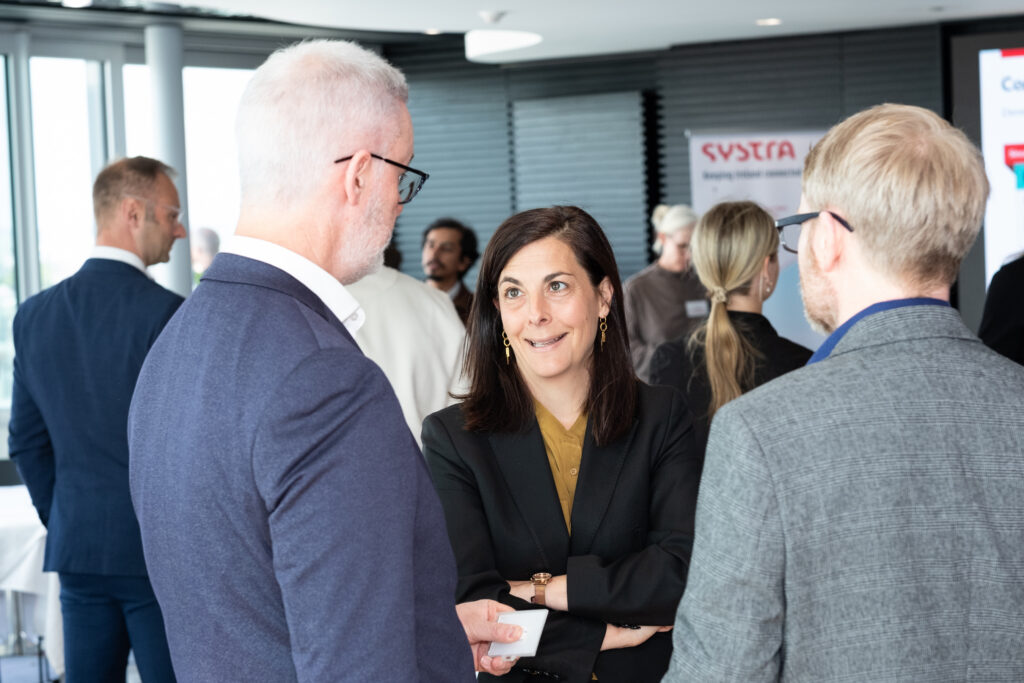
Sarah Madjedi, VP Sales & Bids at SYSTRA, said: “Over the decades, Ireland has offered us far more than business opportunities. It has provided talent, trust, and an environment where long-term partnerships can truly flourish.
“As we move into this new office this expansion is not only about additional square metres. It is about vision; about investing in people; and about embedding an innovative and sustainable approach to support the next decades of growth.”
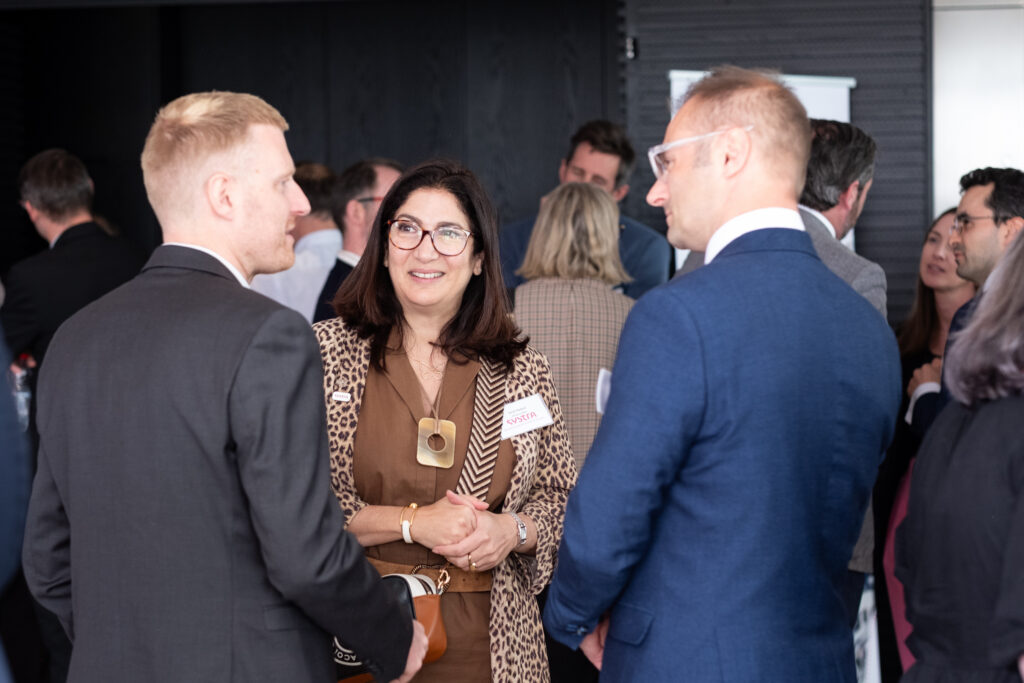
Ian Byrne, Business Director for Ireland at SYSTRA, said: “We are proud to have been part of Ireland’s infrastructure story for over half a century, from our first work in 1975 on the Dublin Rapid Rail Transit Study, to more recent projects such as Dublin and Cork BusConnects, Cork Luas, City Edge, Liffey Valley Bus Interchange Scheme, Greater Dublin Area and Cork Metropolitan Area Transport Strategies and so many more.
“With the strength of our Ireland team and the backing of our global SYSTRA colleagues, we are ready to continue playing our part in helping Ireland deliver a sustainable future that supports growth.”
SYSTRA has played a central role in Ireland’s development for more than 50 years, supporting major infrastructure programmes that enhance connectivity and enable economic growth. Its multidisciplinary teams continue to deliver innovative sustainable solutions across the full project lifecycle from early planning and modelling through design, delivery and operation.
SYSTRA’s Cork office is now located on the 5th floor, Penrose One, Penrose Dock, Cork T23 YY09.
Mental Health Awareness Week – Embracing wellness to prevent burnoutTaking care of your wellbeing both in and out of the workplace is vital in promoting good mental health – something our colleagues at SYSTRA are deeply invested in.
As a core value of our business, working as connected teams is at the heart of how we operate. Through our Equality, Diversity and Inclusion programme, Everyone Onboard, and via our dedicated Wellness Champions, we embrace togetherness and understanding whilst continually supporting health and wellbeing across our teams.
Fostering a supportive, wellbeing-focused work environment plays a big role in preventing burnout. By avoiding unnecessary stress through proactive, sustainable lifestyle changes, our colleagues are keen advocates for a healthy work-life balance and embracing mental wellbeing.
Our wellness-focused podcasts showcase colleagues who are passionate about topics such as mental health, work-life balance and stress management. In each episode, they share insights around managing health and wellbeing with work. Catch up on recent episodes here:
To mark this year’s Mental Health Awareness Week, which takes place from 11th to 17th May, we asked some of our colleagues about what they do to look after their own wellbeing:
Emma Pym, Associate, said: “I really enjoy a good book, time with my friends and family, cuddles with my cat Stella, exploring new places, good food, good coffee and a visit to my local brewery.”
Michael Westwood, Team Leader, said staying active is important to him.
“I like to run and I find that coaching my son’s rugby team helps to take my mind off work,” he said.
“As a Level Crossings team, we were recently lucky enough to attend a wellbeing afternoon at a local yoga retreat where we experienced the extensive benefits of yoga and a healthy lunch.”
Sarah White, Marketing & Communications Manager, said she loves cycling and initially bought a bike to get her to the station for her commute.
“But during lockdown when we had an hour a day to go out and exercise, I went out on my bike and discovered all the local country parks and common land,” she added.
“This is something I’ve continued exploring and I’ve even completed the London to Brighton bike ride twice.”
Find out more about our values: https://www.systras.pro/uk/who-we-are/ambition-values/